

But conviction has another meaning too.
Conviction is also about will. It is the quiet force inside a person that says: I will not be defined by my worst moment. I will build something better.
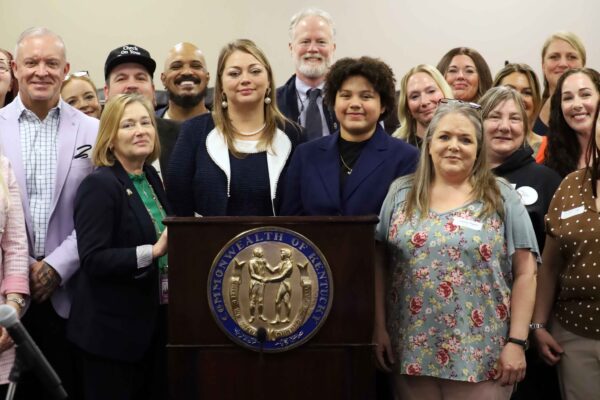
Few people embody both meanings of that word more clearly than Brittanie Bogard.
Today, Brittanie Bogard is a Hopkinsville city councilwoman, a public-school teacher, a mother, and a graduate student working toward her master’s degree. She holds two associate degrees and a bachelor’s degree. She is also the first formerly justice-involved elected official in Kentucky.
But Brittanie’s path here was not simple.
Years ago, she had several nonviolent convictions that led to incarceration. After she returned home, she did what we say we want people to do. She worked. She went to school. She invested in her community. She rebuilt her life, piece by piece.
Yet one barrier remained.
Her record.
For seven years, Brittanie fought to clear it. Seven years of paperwork. Court filings. Filing fees. Waiting periods. Legal hurdles. Bureaucratic hoops that made a difficult process feel designed to fail.
Seven years spent proving something that should have already been clear: people are capable of change.
That is where Kentucky Senate Bill 290 comes in.
SB 290 creates automated expungement for eligible records. Instead of forcing people to navigate a maze of legal procedures, the system itself would clear certain records once the legal requirements are met.
This approach is part of the broader Clean Slate Initiative, a growing effort across the country to ensure that people who have paid their debt to society are not permanently locked out of opportunity.
Because here is the reality:
When people cannot access jobs, housing, or education because of old records, it does not make communities safer. It simply traps people in a cycle where redemption is technically possible but practically out of reach.
Automated expungement recognizes that accountability matters. But so do second chances.
Imagine how many community leaders, business owners, teachers, and public servants are out there right now, held back not by who they are today but by paperwork from years ago.
Senate Bill 290 asks Kentucky to believe something simple.
That redemption should not require seven extra years of fighting bureaucracy.
And that sometimes, the people with the strongest conviction to serve their communities are the very people who know what it means to overcome one.