


Mind you, these letters aren’t new. They’ve poured steadily from correctional facilities for decades. Simultaneously, hundreds of bills have been filed in recent years alone, which in some way target incarceration and the criminal justice system. Some passed. Some failed. Regardless, the letters – and the problems continue.
We’ve seen several of these letters. One mother wrote about the life she had before incarceration.
“I was a mother of four beautiful, healthy children. I had a stable, well-paying job. I had my own house, car, a master’s degree, and money in the bank. Being incarcerated was the last thing I imagined.”
Addiction does not arrive with a warning label. It creeps in quietly and dismantles lives that once looked stable and secure. But incarceration does not just punish the person who made the mistake. It punishes their children, too.
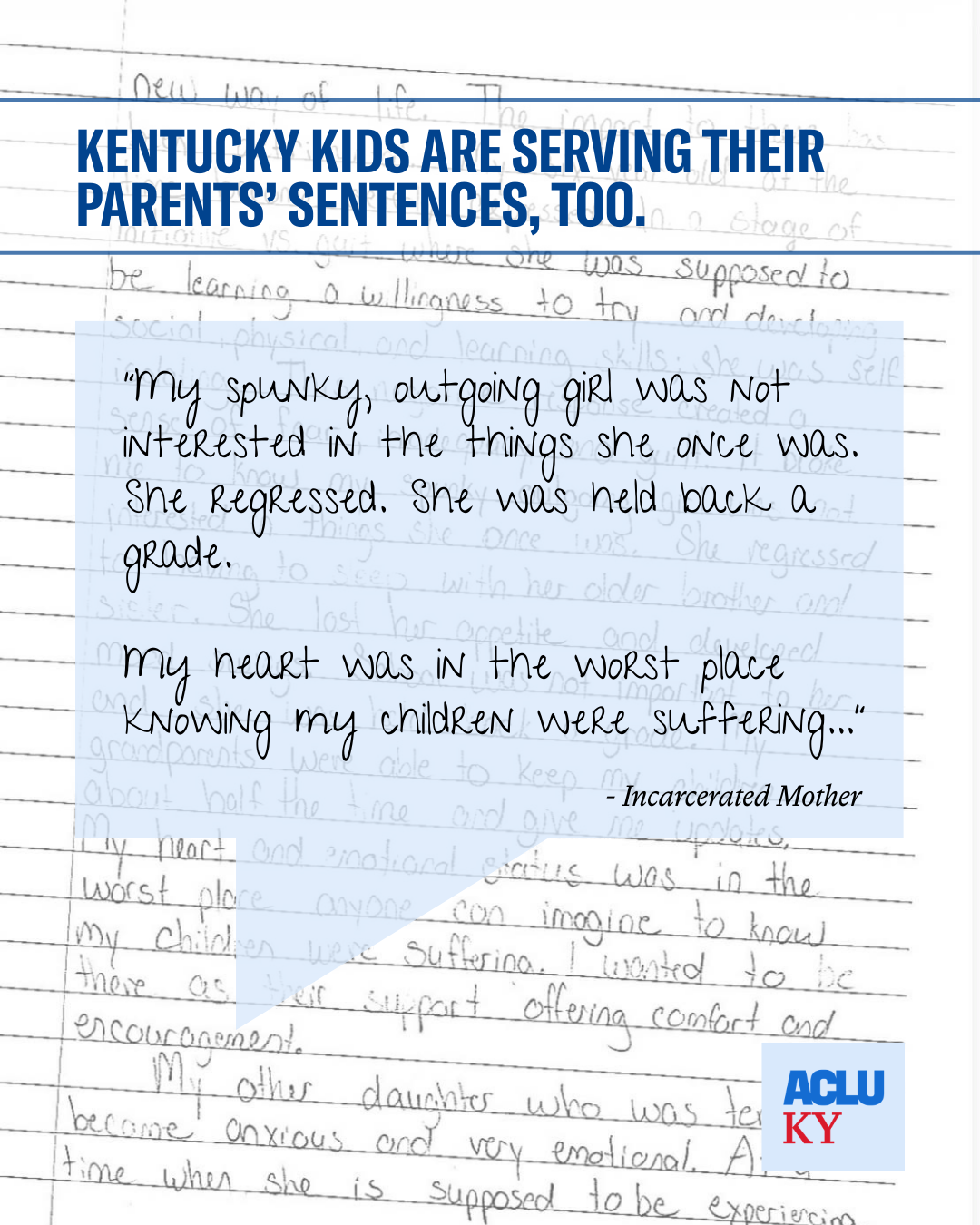
Another mother described what happened to her daughter after she was sent to prison: “My spunky outgoing girl was not interested in the things she once was. She regressed. She was held back a grade.”
Teachers see it.
Grandparents see it.
Children feel it.
The absence of a parent leaves a hole in a child’s life that is difficult to explain, and even harder to repair.
Kentucky has one of the highest rates in the nation of children with incarcerated parents. Behind every statistic is a child navigating confusion, grief, and instability.
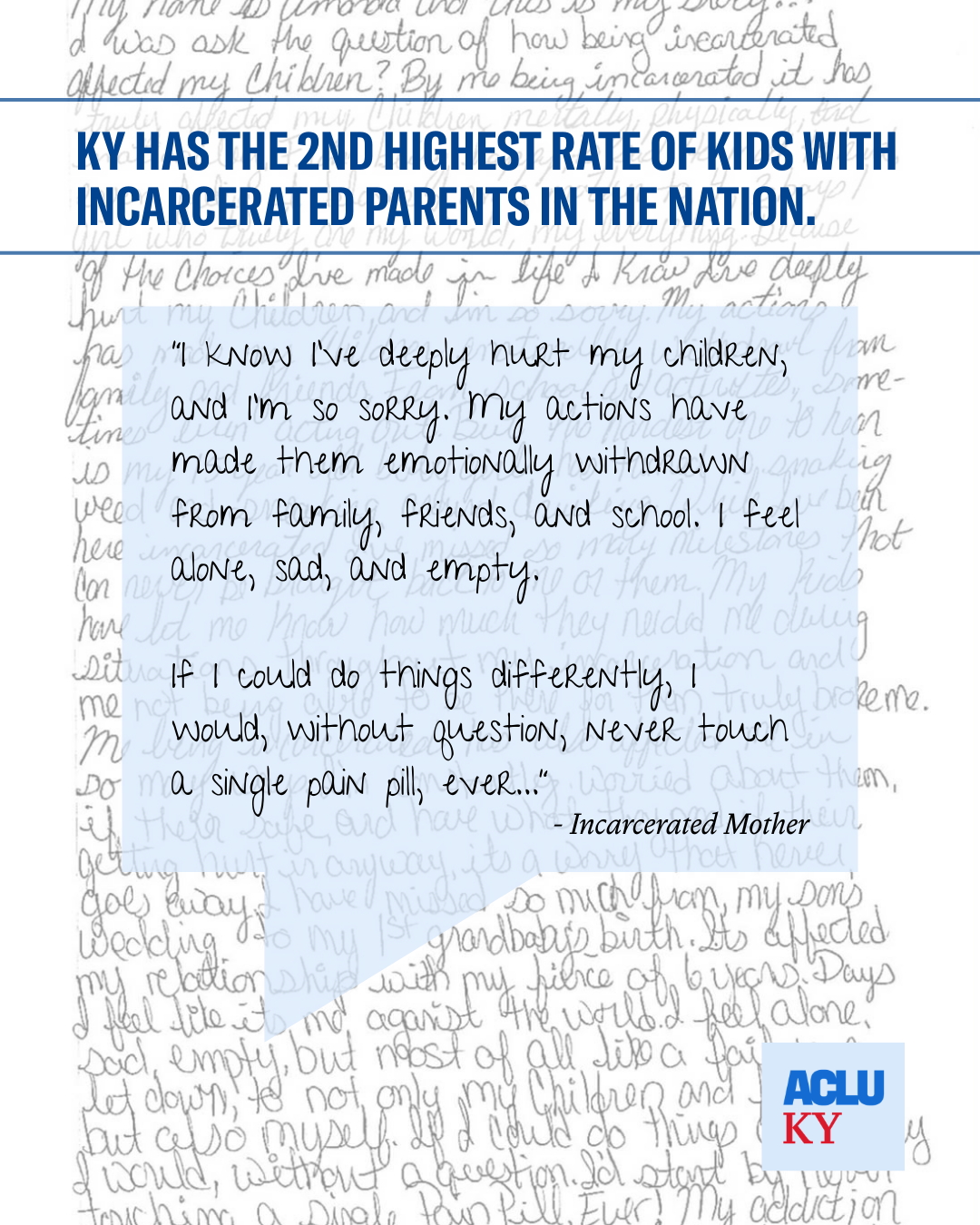
A third mother wrote, with brutal honesty, about the damage she knows she caused: “I know I’ve deeply hurt my children, and I’m so sorry… If I could do things differently, I would never touch a single pain pill.”
The regret is real.
But regret does not bring a parent home.
What could make a difference is treatment delivered before families are torn apart.
That is the idea behind the Family Preservation and Accountability Act.
The bill allows judges to consider community-based alternatives for primary caregivers convicted of low-level, nonviolent offenses. Parents can receive treatment and supervision while remaining connected to their children.
It does not eliminate accountability. It strengthens it.
Treatment addresses addiction.
Supervision ensures responsibility.
Togetherness strengthens resolve.
And families remain intact while recovery begins.
The Kentucky Senate has already passed the Family Preservation and Accountability Act.
Now, the House has the opportunity to follow through.
Because every time a parent is incarcerated for a nonviolent offense tied to addiction, the punishment does not stop at the prison gates.
It echoes in classrooms and in quiet bedrooms. It leaves fingerprints on the lives of children who are left trying to understand why their parent disappeared.
Kentucky can do better.
Passing the Family Preservation and Accountability Act would be a step toward a system that holds people accountable while recognizing a simple truth.
When families stay connected, healing happens faster.
For parents, and for the children waiting for them at home.